
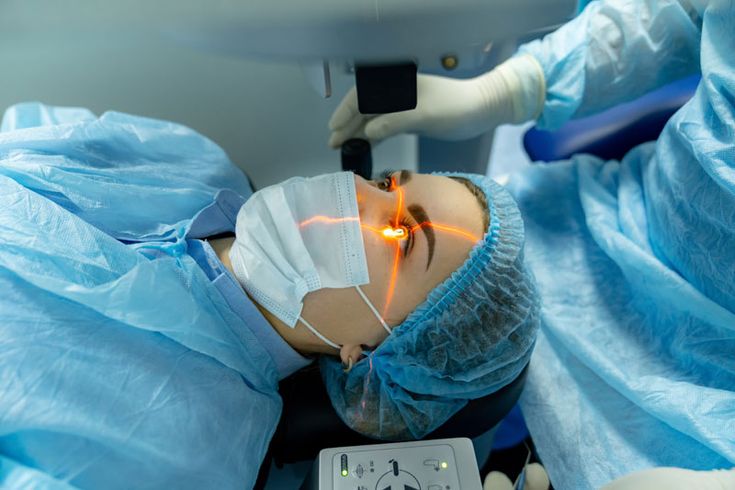
If you wear glasses or contact lenses and live in Noida, Greater Noida or elsewhere in Delhi NCR, it is natural to wonder whether laser vision correction could work for you. The short answer is that it may be an option, but only a comprehensive eye examination can determine whether LASIK is suitable for you.
People considered for LASIK are generally adults whose spectacle or contact lens prescription has stopped changing and whose corneas and overall eye health are suitable for the planned treatment. Age and prescription are only part of the picture. Two people with the same spectacle power may receive different advice because their corneal shape, tear film, eye health and medical history are different.
A pre-LASIK evaluation is an important safety step, not a formality. The outcome may be that you can consider LASIK, should wait and repeat some tests, or should discuss another option. For a general explanation of the procedure, read our page on LASIK eye surgery in Noida. This guide focuses on eligibility, pre-surgery tests and alternatives.
Ophthalmologists assess several factors together, including age, prescription stability, corneal measurements, eye health and medical history. No single number or test result can confirm eligibility on its own.
Age: The US Food and Drug Administration (FDA) states that no laser is approved for LASIK in people under 18 in the United States. Being an adult, however, does not automatically make someone suitable. Doctors often pay close attention to prescription stability, particularly in younger adults.
There is no universal upper age limit. Lens changes such as cataracts and presbyopia (the age-related difficulty focusing on near objects) may affect which vision-correction option is appropriate. LASIK does not prevent presbyopia.
Prescription stability: A prescription that has changed within the past year may indicate refractive instability. Many clinics look for about a year without a significant change, but requirements can vary based on the patient and the treatment being considered. Pregnancy, breastfeeding, certain health conditions and some medicines can also affect vision.
Bring previous spectacle prescriptions to your appointment so the ophthalmologist can review changes over time.
LASIK reshapes the cornea, the clear front surface of the eye, by removing a small amount of tissue. The surgeon needs to determine whether enough healthy tissue will remain after the planned correction. Higher prescriptions may require more tissue to be reshaped, so corneal thickness and shape are important parts of the assessment.
Shape matters as well as thickness. An irregular cornea, including one affected by keratoconus, may increase the risk of complications such as corneal ectasia, in which the cornea weakens and bulges. Corneal mapping helps the ophthalmologist look for irregularities and assess treatment options.
Thickness alone does not tell the whole story; measurements must be interpreted alongside corneal shape, prescription and the planned correction.
Dry eye: LASIK can cause or worsen dryness. If you already have dry eye, the clinician may recommend treatment and reassessment before deciding whether surgery is appropriate.
Infection or inflammation: Active eye infection or eyelid inflammation may need to be treated before elective surgery.
Other eye conditions: Conditions such as glaucoma, cataracts, corneal disease or retinal problems need to be assessed before a vision-correction procedure.
Health conditions and medicines: Some illnesses and medicines can affect healing or vision stability. Tell the ophthalmologist about your medical history and everything you take, including eye drops and supplements. Do not stop prescribed medicine without medical advice.
Having one of these factors does not always mean LASIK is permanently ruled out. Some issues can be treated first; others may mean that a different procedure or glasses and contact lenses are more appropriate.
A pre-LASIK evaluation usually involves several examinations rather than one single test. The exact set varies by clinic and depends on your first findings.
| Test | What it checks | Why it matters |
|---|---|---|
| Medical and eye history | Past eye conditions, surgeries, medicines, general health and lifestyle | Helps identify factors that may affect risk, healing or timing. |
| Refraction and visual acuity | Your prescription and how clearly you see with correction | Shows what needs correcting and helps assess whether the prescription is stable. |
| Slit-lamp examination | A magnified view of the eyelids, cornea and lens | Can reveal inflammation, scarring, dryness or lens changes. |
| Corneal topography or tomography | Maps the cornea's curvature and, depending on the equipment, its thickness and back surface | Helps identify irregular shape and plan treatment. |
| Pachymetry | Corneal thickness | Helps the surgeon assess how much tissue is available for the planned correction. |
| Tear film assessment | The quantity and quality of tears | Can identify dry eye that may need attention before surgery. |
| Pupil measurement | Pupil size, sometimes under dim lighting | May form part of the discussion about visual symptoms such as glare or halos. |
| Dilated eye examination | The retina and internal structures of the eye, when indicated | Helps identify problems that need attention before elective surgery. |
Additional tests may be recommended when the initial examination suggests they would be useful; they are not necessarily required for everyone. Dilating drops can blur near vision and increase sensitivity to light for a few hours. Ask the clinic what to expect and whether you should arrange transport afterwards.
The examples below are not a way to diagnose yourself. They are factors that may lead an ophthalmologist to postpone surgery, investigate further or discuss another option:
You are under the applicable minimum age or your prescription is still changing.
You are pregnant or breastfeeding, when vision may fluctuate.
You have an active eye infection or inflammation.
You have dry eye that needs treatment or further assessment.
Your corneal measurements show an irregular shape or insufficient suitability for the planned correction.
You have an eye condition, a health condition or take medicine that could affect the procedure or healing.
You have had refractive surgery before and need a specialist assessment of whether any further procedure is appropriate.
Your expectations do not allow for the possibility of residual prescription, visual symptoms or the need for glasses for some activities later in life.
Some jobs, professional bodies and contact sports may also affect which procedure is considered. Discuss your work, sports and daily visual needs with the ophthalmologist.
A recommendation to wait does not always mean a permanent refusal; the next step depends on the reason for the delay.
Sometimes, but each case requires an individual assessment. Corneal thickness must be considered alongside corneal shape, prescription and the amount of correction planned. A higher prescription may require more tissue to be reshaped, which makes these measurements especially important.
The ophthalmologist will also check whether your prescription falls within the range appropriate for the specific procedure and equipment.
Depending on the findings, the discussion may include:
LASIK: May be considered if the corneal measurements and other findings support it.
PRK (photorefractive keratectomy): A surface laser procedure that does not create the corneal flap used in LASIK. Suitability and recovery differ from LASIK.
ICL (implantable collamer lens): A lens is placed inside the eye without removing corneal tissue. It is an intraocular procedure with its own risks and assessment requirements.
Glasses or contact lenses: May remain the most appropriate option if surgery is not advisable.
No option is automatically the safest or best for every person. Ask the ophthalmologist to explain why a particular option is being considered and what its benefits, limitations and risks are in your case.
These procedures are not interchangeable. The right choice depends on your examination, prescription, cornea, eye health and visual needs. The following summary can help you prepare questions for your appointment.
| Option | General description | Question to ask |
|---|---|---|
| LASIK | A thin corneal flap is created and the tissue underneath is reshaped with a laser. | Why is this approach suitable for my cornea and prescription? |
| Femto-LASIK | A femtosecond laser creates the corneal flap. | What difference, if any, does this method make for my eyes? |
| PRK | A surface procedure that reshapes the cornea without creating a LASIK flap. | Would a surface procedure be appropriate, and how would recovery differ? |
| SMILE | A small incision is used to remove a small piece of corneal tissue; it is used for selected prescriptions. | Is my type and range of prescription suitable? |
| ICL | An implantable lens is placed inside the eye; corneal tissue is not removed. | What risks, checks and follow-up apply to an implantable lens? |
| Contoura Vision | A topography-guided approach that uses a detailed corneal map to plan laser treatment. | Would this approach offer a meaningful benefit for my eyes? |
Technology names can be confusing, and a newer-sounding option is not automatically the best one. Rather than asking which procedure is "best", ask which option is appropriate for your eyes and why.
Consider taking these questions to your consultation:
Eligibility: Based on my test results, am I suitable now, should I wait, or should I consider another option?
Test findings: What do my corneal map, thickness measurements and tear film assessment show?
Risks: Which risks are most relevant in my case, including dry eye, glare, halos or residual prescription?
Expectations: Might I still need glasses for certain activities or for reading as I get older?
Recovery: When can I return to work, driving, exercise and swimming, and what follow-up will I need?
Alternatives: What are my options if LASIK is not recommended?
Care team: Who will perform the procedure and who will handle follow-up care?
Costs: What is included in the estimate, such as testing, follow-up visits and any additional treatment?
If you are based in Noida, Greater Noida or elsewhere in Delhi NCR, ClariMed Healthcare can help you understand the care pathway and explore consultation options with ophthalmologists across the region.
Confirm the actual consultation and treatment location when booking, because the available specialist and hospital may vary.
To make your appointment more useful, consider bringing:
Your current glasses or contact lenses and previous spectacle prescriptions, if available.
A list of medicines, eye drops and supplements you take.
Details of previous eye infections, injuries, operations or long-term health conditions.
Previous eye reports or test results.
Your questions about suitability, alternatives, risks, recovery and costs.
Contact lenses: Wearing contact lenses can temporarily affect corneal shape and therefore influence the measurements used for LASIK planning. The clinic may ask you to stop wearing them before testing. The required period varies by lens type and clinic protocol, so follow the instructions you receive rather than relying on a fixed number of days.
Medicines: Tell the ophthalmologist about everything you take. Do not stop or change prescribed medicine unless your treating clinician advises you to do so.
What is the minimum age for LASIK?
The US FDA states that no laser is approved for LASIK in people under 18 in the United States. In practice, a doctor may advise waiting longer if your prescription is still changing. Your eligibility depends on the applicable requirements and your clinical examination.
How long should my eye prescription be stable before LASIK?
Many clinics look for about a year without a significant prescription change, but the exact requirement is individual. Your ophthalmologist may review old prescriptions or repeat measurements before making a recommendation.
Which tests are done before LASIK surgery?
The evaluation commonly includes a prescription and vision check, examination of the front of the eye, corneal mapping, corneal thickness measurement and tear film assessment. Other checks may be included based on your medical history and examination findings.
Can thin corneas affect LASIK eligibility?
Yes. Corneal thickness is considered together with corneal shape and the amount of correction required. A thin measurement does not automatically determine the answer; an ophthalmologist must assess the full set of findings and discuss alternatives when appropriate.
Can people with high eye power undergo LASIK?
Some people with higher prescriptions may qualify for a vision-correction procedure, while others may need to consider alternatives. The decision depends on the prescription, corneal measurements, device-specific treatment range and overall eye health.
Who may need to postpone or avoid LASIK?
People with an unstable prescription, pregnancy-related vision changes, active eye problems, significant untreated dry eye, certain corneal conditions or health factors affecting healing may need to wait or consider another option. Only a clinical evaluation can determine what applies to an individual.
Is LASIK suitability confirmed at the first consultation?
Sometimes the first assessment gives the ophthalmologist enough information to make a recommendation. In other cases, more tests, repeat measurements or treatment of an existing issue may be needed. A consultation does not commit you to surgery.
What should I ask before deciding?
Ask why the procedure is or is not suitable for your eyes, which risks are most relevant to you, what alternatives exist and what follow-up care is needed. You should understand the reasoning before making a decision.
Choosing vision correction is a personal decision, and there is no need to rush. If you are considering LASIK, start by understanding the procedure and having your suitability assessed by a qualified ophthalmologist.
You can read more about LASIK eye surgery options on ClariMed Healthcare, or request a consultation to discuss the next steps.
Medical information disclaimer: This article is for general information only and does not diagnose any condition or recommend a particular procedure. Whether LASIK or another vision-correction option is suitable can be determined only after an appropriate clinical examination by a qualified ophthalmologist. ClariMed Healthcare does not provide medical diagnoses.